

As a military historian, much like many others, I do like to go to a militaria fair every now and again. Of course, there are the usual items that seem to crop up at every single fair – weaponry, photographs, First World War wire cutters, and so on. But sometimes there is a chance to find a little gem of an item; something that piques an interest in you. I recently had one of these, at Bromsgrove Militaria Fair, when I came across a small briefcase filled with papers and photographs, with the bulk of them relating to one man – James Ernest Rowley.


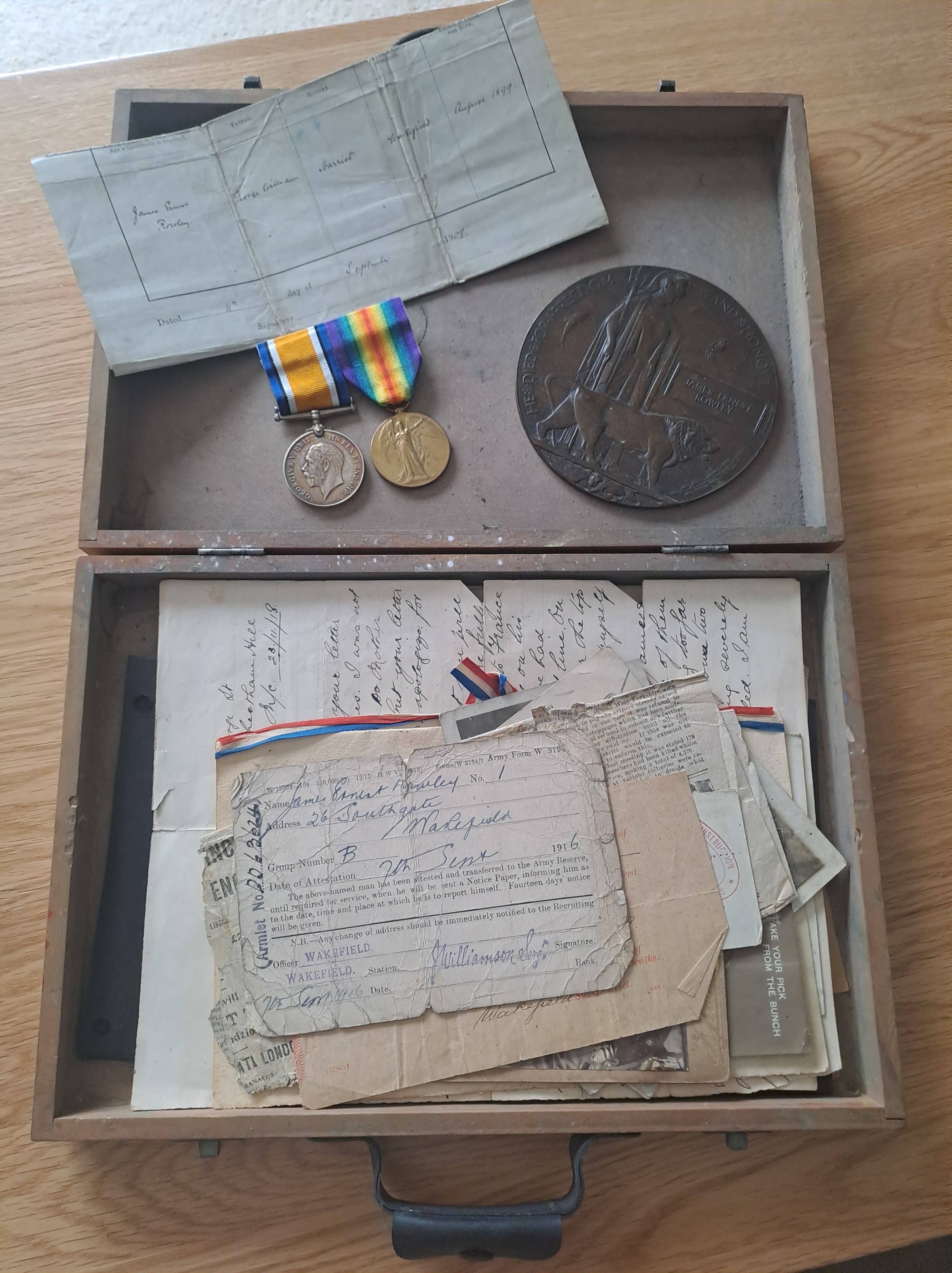
Born on 7th August 1899 in Wakefield, James Rowley was the son of George William – an auctioneer and valuer – and Harriet Rowley. In the 1911 census, his father George was now a clerk in a steelworks, James was still in school and had a younger sibling Mabel, who was 9 months old.
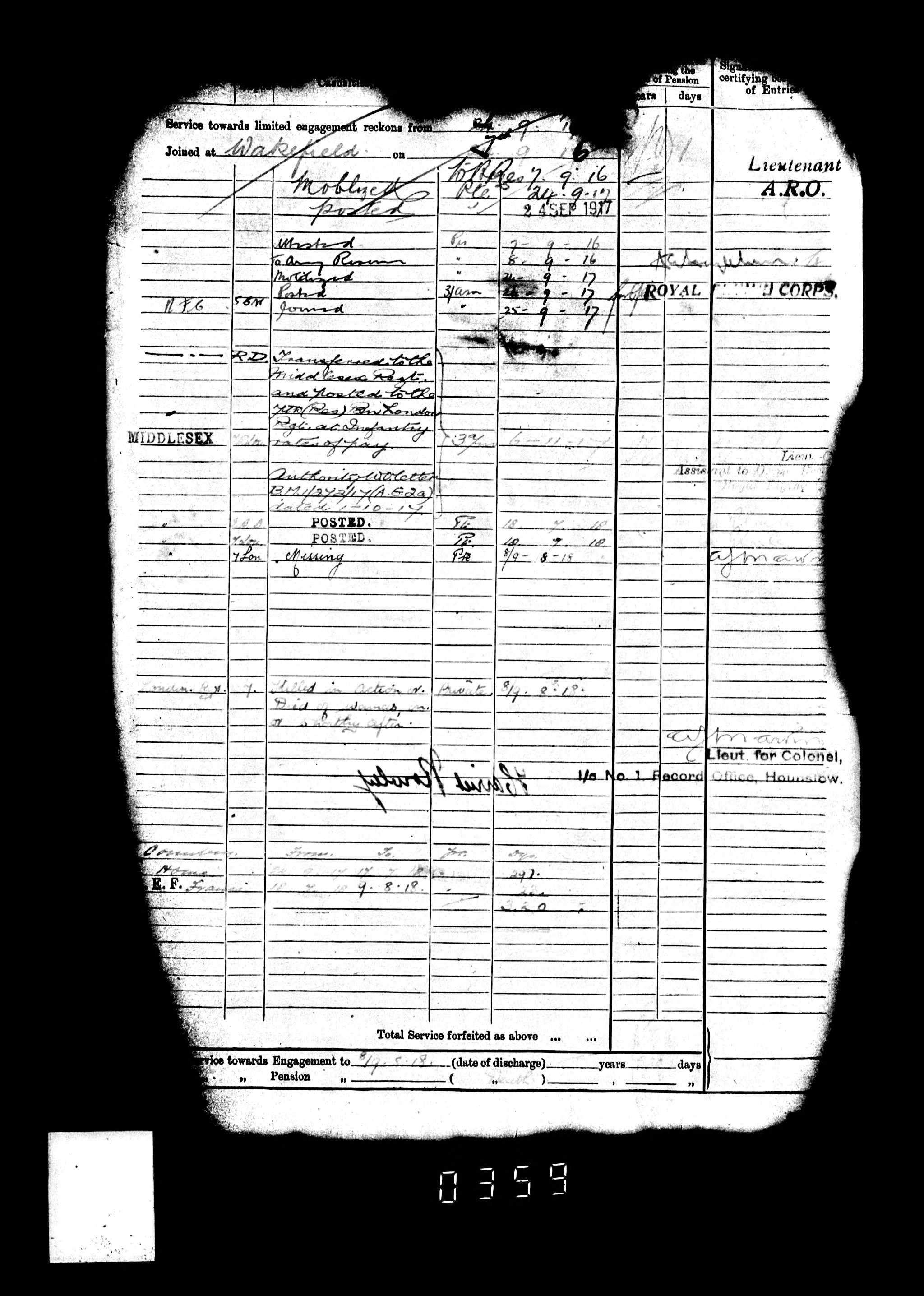
Most of the documentation in the briefcase relates to different elements of James’ military service. The first indication of any military involvement led to me downloading James’ service record from Ancestry – which indicated that James attested on 7th September 1916, aged 17 years and 1 month old. This was below the legal age for enlisting in the forces but in James’ case, he was transferred to the Army Reserve – with the paperwork noting he will stay in the reserve until a time when his services were required.
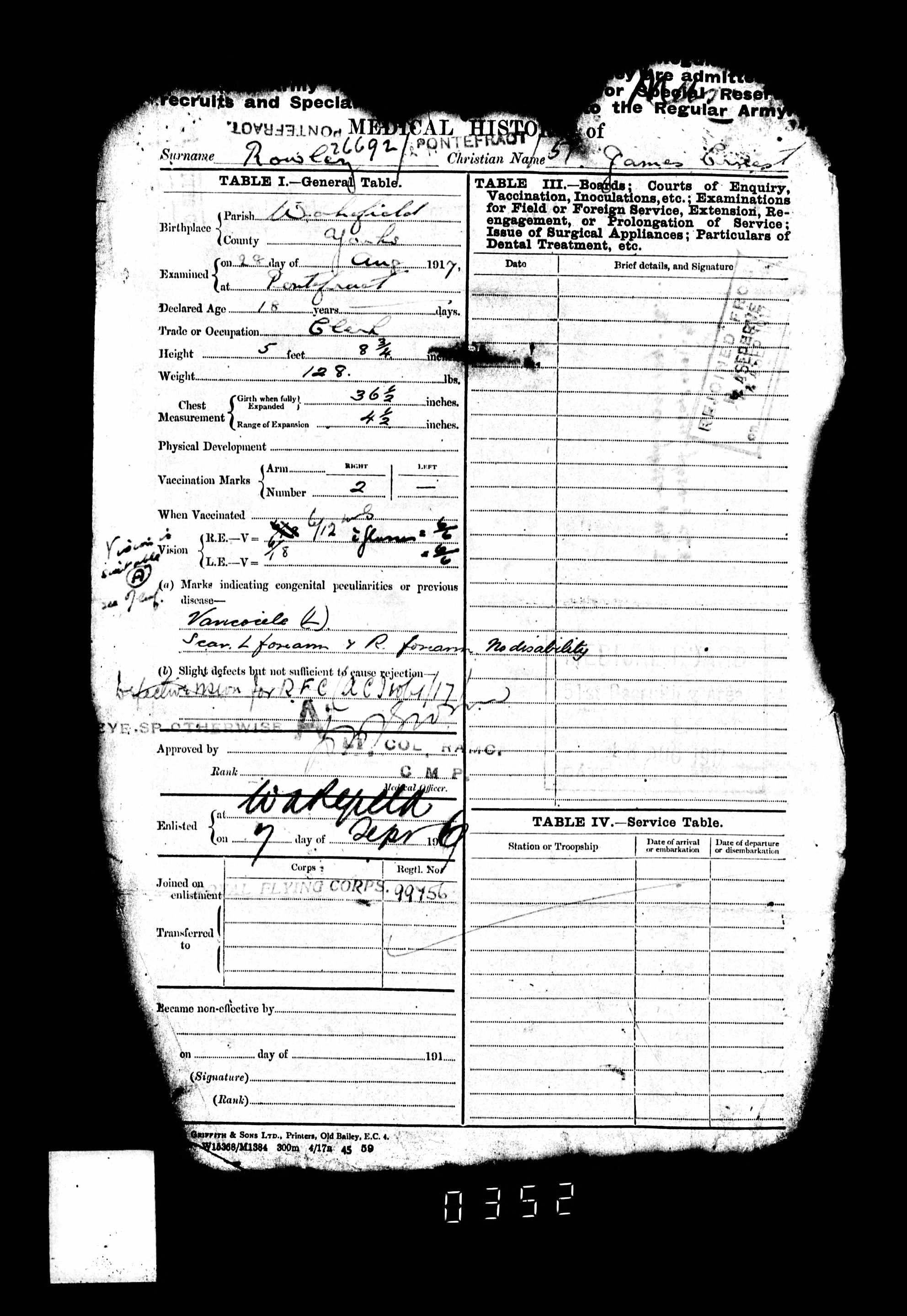
The following August – just after his 18th birthday – on the 28th of the month, James underwent a medical examination to be transferred out of the Army Reserve. His service record details this examination where the following information is revealed about James – he was 5ft8¾inches, 128lbs and when fully expanded his chest measured 36.5 inches. Upon passing this examination, James was transferred first to the Middlesex Regiment and then 7th Bn London Regiment on 25th September 1917 and given the service number G/96261. However, this was not James’ first choice – he had originally requested the Royal Flying Corps to train to be a pilot, but even though he had good enough eyesight, his medical examination discovered something that prevented him from flying.
James does have an opportunity for education whilst he is in the Army. On 27th February 1918, he receives his Second Class Certificate of Education which covers Arithmetic, Writing from Dictation and Composition including writing a simple essay. He also completes a First Aid Course in Aldershot on 18th May 1918.
According to his service record and after completing his training, James is finally sent to join his unit abroad on 18th July 1918. This date is telling as not shortly after this, the British, along with Americans, Australians, French and Canadian troops, would be engaging in the Battle of Amiens from 8th August, notably called ‘the black day of the German Army’ by General Ludendorff.
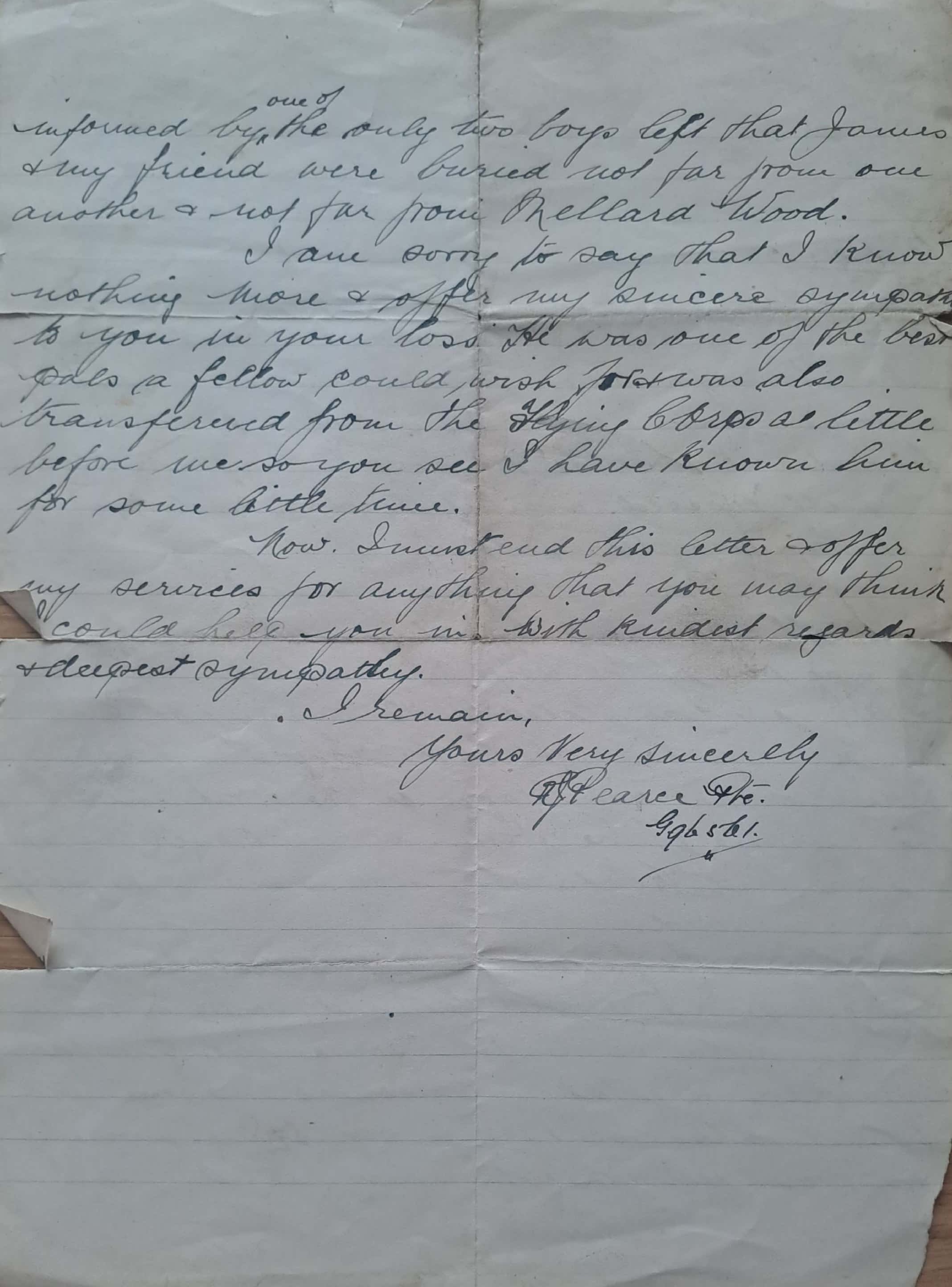
Unfortunately, this is the same day that James is wounded. He and his unit were tasked with attacking locations around Mellard Wood as part of the Battle of Amiens. Two letters in the briefcase from Pte Pearce, a friend of James’, stating he had been told by two other soldiers that James had been wounded by a piece of shrapnel and was buried near Mellard Wood. Based on my research, it appears that sadly James was killed in the early hours of 9th August 1918 – just two days after his 19th birthday.


Also contained within the briefcase were James’ medals, his death penny and a selection of photographs. One of these is of the original grave marker for James, which is a nice example of showing how the dead were commemorated before the introduction of the headstones that we are now more familiar with.

There is also a letter to the family stating that due to a variety of reasons, it was necessary to move James’ remains and that he would now lie in Beacon Cemetery near Sailly-Laurette, less than 1km away from where he had been buried in Sussex Cemetery.

We know that James’ family are able to make the journey over to France to see their son’s grave. By this point, James does have the standard headstone that is now indicative of a CWGC burial of the First and Second World Wars. In the briefcase, there is a series of 3 photographs, one of just the headstone, a wider shot of the cemetery and one of the headstone with a woman who I presume is Harriet, James’ mother.

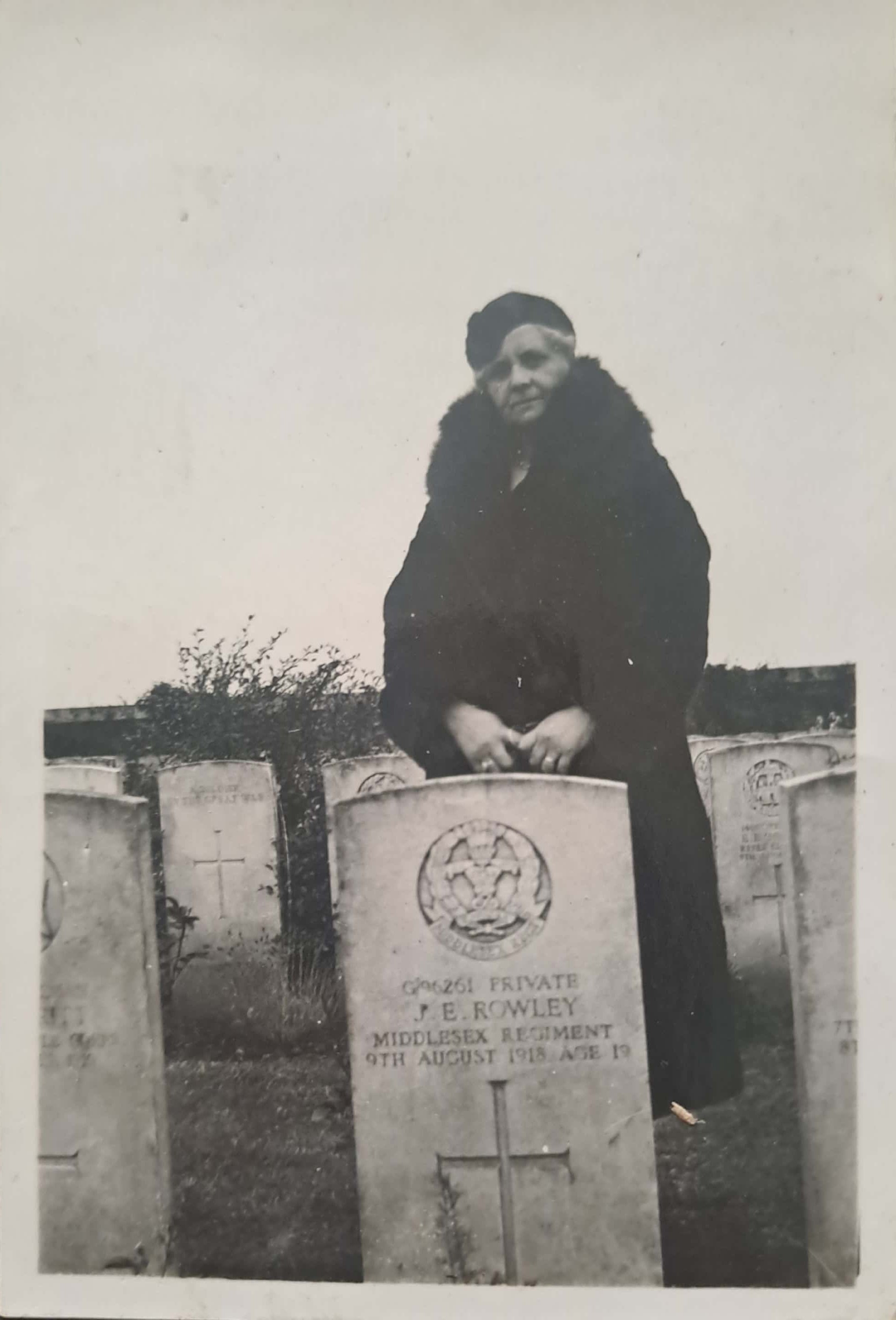
It truly is amazing to me to think that this little, innocuous briefcase has contained the details of James and what happened to him potentially for over 100 years. Now that I have these items, I won’t be getting rid of them in a hurry and my goal is now to get to James’ grave in order to continue the remembrance of him that his family so clearly started and wanted to maintain.
 historyandmoore.com
I have come across an image of Otto Skorzeny titled Berlin 1941 but it’s from a film shot in Vienna 1938,I know title and context of film,I only study history as a hobby so I would like info on how to get it validated professionally,feedback welcome,image attached
Sent from Outlook for Androidhttps://aka.ms/AAb9ysg
LikeLike