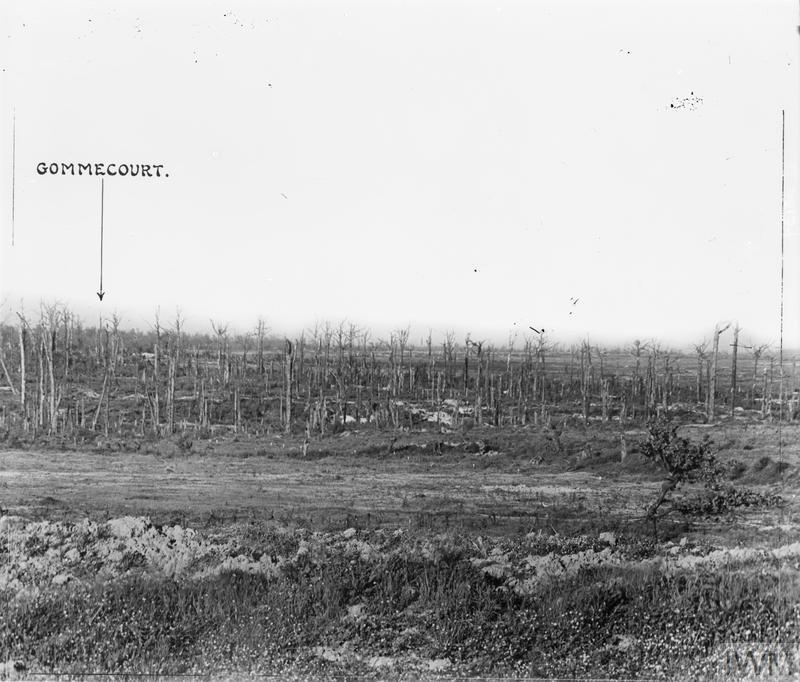
A year ago, I purchased the book ‘Tommy at Gommecourt’ for my own personal interest and as part of my ongoing interest in the actions and men of the 46th (North Midland) Divisions. The book is a compilation of the experiences of Private Thomas Higgins from Stoke-on-Trent, serving in the 1st/5th Battalion, North Staffordshire Regiment, during the First World War. Today, on the 110th anniversary of the start of the Battle of the Somme, I thought I would share his account of what happened on the 1st July 1916 for those fighting in the diversionary attack on Gommecourt – for a detailed version of events, click here.
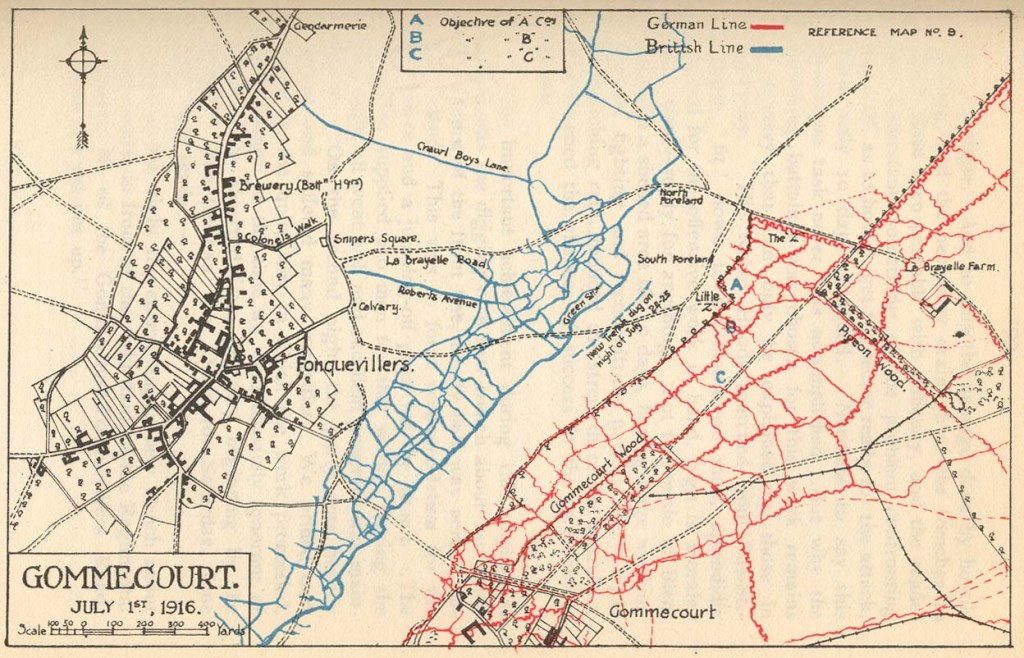
Tommy at Gommecourt – Thomas James Higgins, 1st/5th Bn North Staffs
On the evening of June 30th, we fell in to march up to Foncquevillers. The Colonel, Lieut-Col Burnett, made a short speech before we started. “Well Boys”, he said, “By sunrise tomorrow morning I hope to see you on the other side of Gommecourt Wood.” By that time or soon after, he was dead. Then the whole Battalion started to sing that well known hymn, “God be with you till we meet again”. I have never heard that hymn sung with so much meaning as it was sung that evening, by men who were going to face death in all its most terrible forms. Whenever I hear that song now, I think of that scene. The setting sun, the men with heads bowed thinking of those so dear to them. Many who sang that night, in a few short hours their voices were stilled for ever.
We got to Foncquevillers late in the night. We were told the 6th Norths were going over the top first and we were to follow them with picks shovels and barbed wire. These were to strengthen the position when we got there. Then we filed into a trench at the rear of the front line. This was up to the knees in water and here we stood and waited for daylight. When they came to serve our platoon out with rum, they found out someone had pinched it. So, we got none. We stood there in the water with our teeth chattering with cold. As daylight grew stronger our intense bombardment opened out, it seemed as though all the artillery in the British army were gathered on our front. The din was terrific. This kept up for about an hour. Then it suddenly stopped. The 6th North should have gone over then, but Fritz rained such an awful shower of shells, mortars and bullets, that hardly a man got to his lines. We then had orders to advance.
In the trench leading to the front line, the sights I saw are impossible to properly describe. The trenches were literally running with blood. The dead and dying lay in heaps at the bottom of the trench. We had to climb over them as we went on. The shells were bursting everywhere, overhead, in front, and behind us Fritz was blowing our trenches flat. The barbed wire I was carrying kept getting entangled in broken wires and falling in the broken trench. I was cursing like mad over it.
The Officer, Mr Bowers from Caverswall, said, “Let me carry part of it for you.” I said, “Thank you sir.” He took the iron stakes off me. Soon after a shell burst over us and killed him and I nearly fell on top of him. We were losing men fast. They were falling in front and behind, and we were walking on bodies all the way because with Fritz blowing the trenches about, they were so narrow. Then a Mr Robinson from Newcastle took charge and led us to the advance trench, by this time I had thrown the spade and barbed wire away. The advance trench was nearly flat. As we turned into the trench, we met Col Burnett and Capt. Fletcher of C. Coy. It was the last I saw of them – they were both killed there a few minutes later.
At last, we got to the jumping off place, with s half the number of men who started. In this trench the same scenes of blood and death. I should think about 1 hour over 600 men had been killed and wounded in the trenches alone. The 6th North was practically wiped out when we got to them. We rested a second or two, then came the order.
“Fix Bayonets.” The bullets were zipping just over the top of the trench and in No Mans Land whiz bangs and shells were bursting in hundreds. No one expected to come back again. The Officer yelled at the top of his voice: “One. Two. Three.” Over we went with the best of luck. The man next to me named Chorlton fell back with a bullet in his head as he was springing over. I was more lucky, I got over with one spring, and there we were in a long line, rushing forward like mad men, to kill, or be killed. The line did not last for long. Men were falling like skittles bowled over. Some would sink down in a heap, others would shout and throw their hands up and totter forward a pace or two then fall face downwards never to rise again. The last one I saw was the Officer Robinson firing his pistol like mad, then he went down. I was close to Fritz’s wire now. I could see them throwing bombs over the wire at us. Then there was a flash and I felt a fearful bang in my back and down I went among his smashed-up wire. When I recovered myself, I had a bad pain in my back. I felt there and found my equipment tunic and shirt ripped open, but strange to say only a scratch on my back, but it was very sore. It must have been a piece of shell that hit me flat and knocked me out. If it had hit me edgeways it must have broken my back.
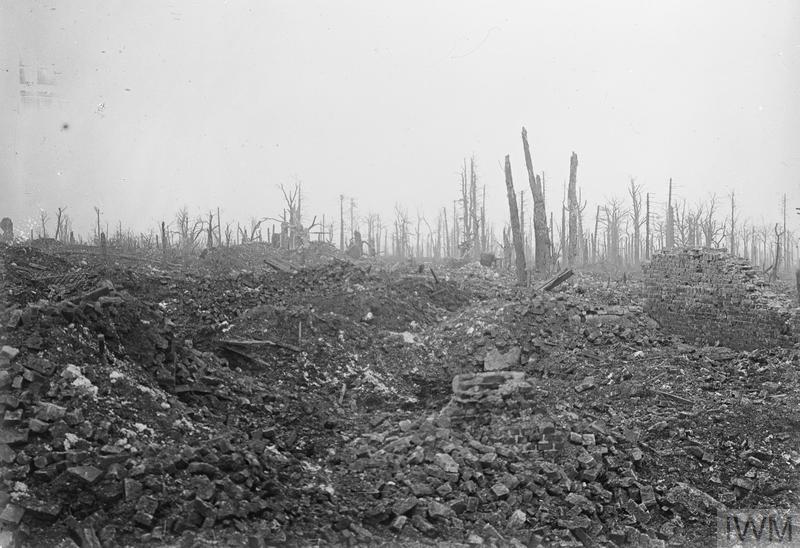
Then I looked about me and saw the awful position I was in. I shall never forget that Saturday, July 1st 1916, if I live to be a hundred Shells were dropping close to me choking me with fumes and dirt. I soon found another danger – Fritz was riddling any poor devil he saw moving with bullets. I moved once and some bullets whizzed past just missing my head. I lay still after that with barbed wire sticking in me, I dare not move. That awful day seemed a lifetime to me. No more men came after us as the Division had not many left. If the Germans had made a counterattack, they would have easily taken our lines then.
Now the sun began to get high up, and I was parched with thirst, my water bottle had been knocked off somehow coming over. The smell of blood and dead bodies was sickening. I mentally said goodbye to those I loved, as I did not seem to have the ghost of a chance of living through that day. At last exhaustion was too much for me and amid all that horror I must have slept. I was aroused from my stupor late in the afternoon.
The noise of another terrific bombardment was the cause. I glanced behind me as the ground seemed to shake under me. Oh God what a sight I saw, I’m sure my hair stood straight. The ground seemed a mass of fire. Shells were dropping in hundreds and seemed to be leaping towards where I lay. I now gave up all hopes of life and hoped for a quick death. With my teeth tightly clenched I awaited the worst. I seemed to be almost covered with mud, my face and hands were bleeding. I suffered the tortures of the damned. Then the line of fire lifted and passed over me and was pounding on Fritz’s line. I heard after they kidded him up, we were going to attack here again. Instead, they went over at Hebuterne on our right.
At last darkness slowly began to fall. But Jerry made it almost like day, by the Very lights he sent up in hundreds. Then I saw the Germans crawling out and turning the bodies of our chaps over. I thought it time to get a move on. I wriggled backwards for a good way. dragging yards of broken wire with me that was stuck in my clothes. It ripped my flesh, but I took no heed of that. I got it off me, then I got up and started to run, or rather stagger, I was so done up. As I did, other forms rose from the ground. They were 5th and 6th North who had been wounded and one or two who had been left on No Mans Land and could not get back.
Fritz saw us and turned his machine guns. What a rush for the advance trench. A chap named Jack Heywood who had been lying close to me all day tumbled in the trench along with me. We were a nice pair of broken-down nervous wrecks. We simply lay on our backs in the bottom of the trench, too beat to move for a while. After we had rested for a spell, we made our way to the front line helping one another over the dead bodies that lay in the trenches. Some of them lay under water, in places it was so deep I think some of the poor chaps must have been drowned when they were wounded it was so deep. At the first sentry post we came to we said, “Are you the Stafford’s”. They said, “No. The Kings Own. Your division, what’s left of ’em, have been taken out of line. you’ll find them at Souastre.”
Jack and I dragged our weary bodies along past heaps of dead boys in the communication trench where they had been piled ready to take out for burying. Through Foncquevillers on to Souastre, about 3 miles, we crawled rather than walked. There we found the Battalion, or what was left of them, lying in some old trenches.
The Quarter Master of C. Coy was serving some rum out. I went up to him. He said, “Hello, I heard you were killed old man.” He shook hands with me and gave me a canteen of hot tea with plenty of rum in it. I drank it up and rolled in the trench close by and went to sleep. This would be about 3am in the morning of July 2nd. We were let alone until about 10am next morning. Then we were ordered to fall in for a roll call. Now I could see what I looked like. I was covered with blood and mud from head to foot, my hands and face were all over cuts and scratches. My clothes were in rags. Bullets had gone through the back part of my trousers, and my haversack had bullet holes all over it. I said then, and I still say it was a miracle how I escaped with my life on that July 1st 1916. Truly my time had not yet come. The Battalion had about 150 men left. In my platoon there were about 7 of us and 5 of these had not been over. Only Jack Heywood and returned out of the platoon that went over the top.
This is all I know of the Battle of Foncquevillers – or Gommecourt. Poor Jack Regan was killed here. Jack Heywood pulled through until the last months of the war and then was killed. Jim Lloyd, writing to his wife afterwards, said one chap I felt right sorry for was Tommy Higgins, he looked a complete wreck. We left the old trenches and went into the village of Souastre. Here we found a draft of 500 men fresh from England to make the Battalion up again. We marched away in the afternoon and arrived at night at a village named Bailleumont. Here we stayed for that night.
Our rations consisted of bully beef and hard biscuits and not too much of them as the transports were getting blown up. Next day, July 3rd, we started for a new section of the trenches to take over from another division who had got to go to the hell hole we had just come from. Where we took over this time was on the left of Gommecourt. We could hear and see the bombardment still going on there. The trenches were called the Ransart Sector, from the village Fritz held in front of us. We relieved a London Battalion. They asked us, “Where’s that place where the heavy bombardments are taking place?” And we told them, “That’s where we have just come from and where you are going to. That’s what we are relieving you here for. That is the Somme.” It didn’t half put the wind up them. They said they were told they were going out for a rest! I’m afraid a lot of them had their long last rest later on two days later they were in the thick of it.